
OnlyFans pricing does not stay still, and ranking cards are where that movement becomes visible. When a creator adjusts their subscription rate while you are still inside a paid period, the card data you relied on at signup no longer matches what you will be charged next. This article explains how to read those mid-cycle shifts correctly, so you can decide whether to renew at the new rate or exit before auto-renewal cancellation kicks in. BestOnlyFans ranking cards are the working example throughout, because their layout exposes price history and timestamps more clearly than most directories.
The core problem is simple: a price change is not the same event as a ranking card update. One happens on the creator’s dashboard, the other happens whenever a directory refreshes its index. Between those two moments sits a gap that can run from hours to several weeks.
How Price Changes Appear on Ranking Cards
The platform applies a new rate immediately for new subscribers and at the next renewal for existing ones. Timestamps on the card show when that snapshot was taken, and that single number changes how much weight the price field deserves. BestOnlyFans refreshes its rankings every month.
Cards generally fall into three refresh behaviours. Some update daily, some weekly, and some only when a listing owner edits the entry by hand. A card dated nine days ago showing $9.99 tells you what the price was nine days ago, not what it is now.
| Signal Type | What Ranking Cards Show | Interpretation Action |
|---|---|---|
| Immediate update | New price with a fresh timestamp within 24 hours | Trust the figure, verify once on the creator page |
| Delayed refresh | Old price with a timestamp older than seven days | Treat as unverified, recheck before renewing |
| Promotional flag | Strikethrough price plus a discount label | Assume the base rate returns after the promo ends |
| Historical overlay | Prior price points plotted on a small timeline | Use the shape of the line, not the last dot alone |
| Volatility score | Rating derived from frequency of past changes | High scores mean budget for movement, not stability |
One reliable rule: when the card timestamp and the creator’s own page disagree, the creator’s page wins. Ranking sites exist because OnlyFans has no built-in discovery feed or directory, which means every card is a third-party snapshot rather than an official record.
Decoding Historical Price Patterns
A line of five or six price points across twelve months tells you whether the creator treats pricing as a fixed decision or an ongoing experiment. Stable creators show long flat stretches, often six months or more at the same figure.
- Multiple changes inside 90 days: the creator is actively testing price sensitivity.
- Reversion to a previous rate: the increase did not hold, so the higher figure was likely exploratory.
- Seasonal adjustment patterns: predictable bumps around holidays suggest planned, temporary moves.
- First-time paid conversion from free: a free page moving to a paid base rate is structural, not a test.
- Category norm deviation: a price far above typical $4.99-$15 brackets signals premium positioning or an error.
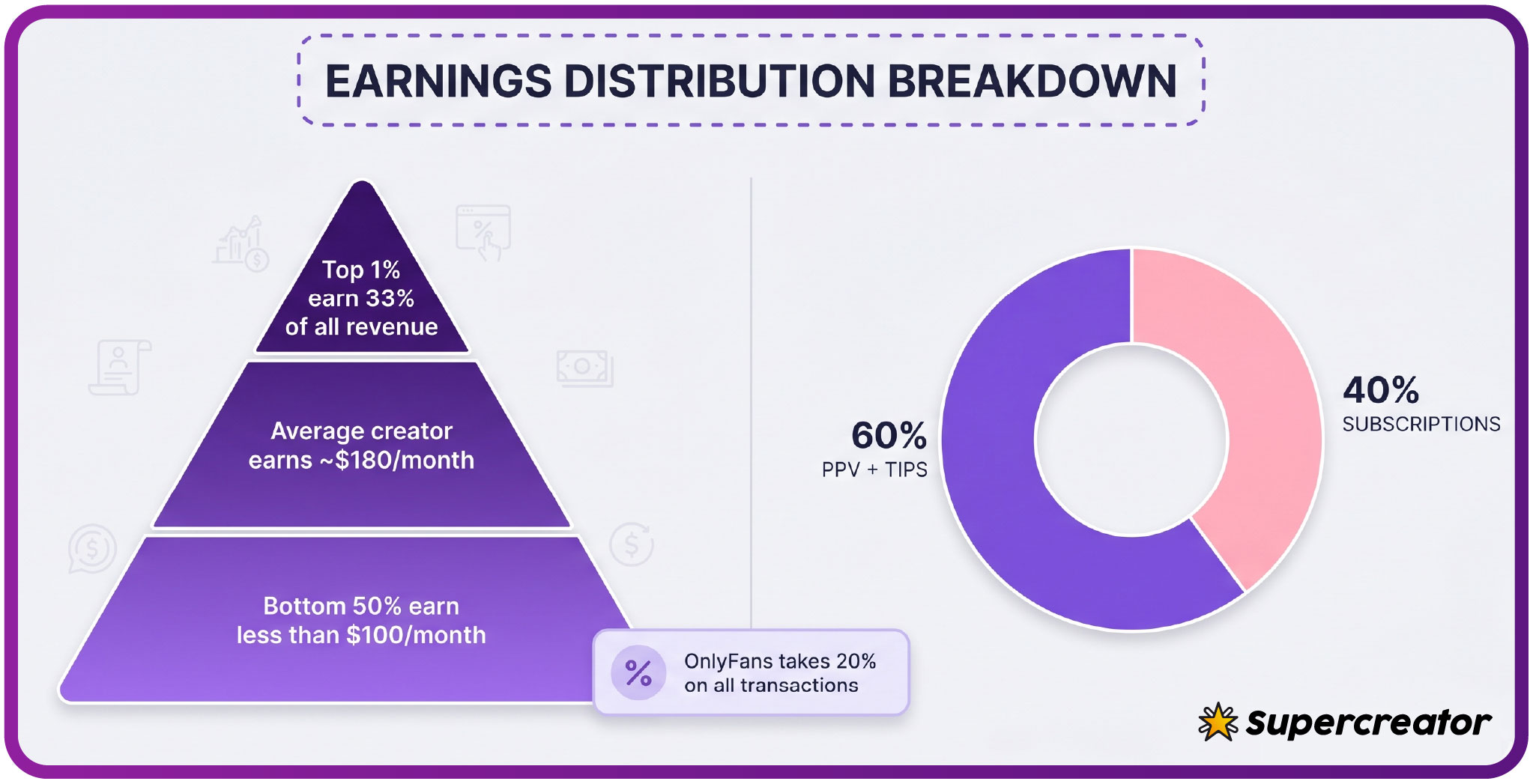
The platform takes 20% and the creator keeps 80%, so a creator raising a rate from $9.99 to $14.99 is chasing roughly $4 more per subscriber after fees, not the full headline difference.
Timing Your Renewal Decision
The most important mechanic in this process is that when a creator raises the price, auto-renew stops. That means a mid-cycle increase never charges you the new rate without an explicit action.
- Verify your current paid-through date in your subscription settings.
- Check the ranking card timestamp and note how old the price reading is.
- Confirm the new rate across two independent sources before budgeting for it.
- Calculate the monthly impact of the increase against your existing spend.
- Set a calendar reminder two days before the period ends so the choice stays deliberate.
Tip: if a card shows a promotional first month at $3, that is a discount on the entry price, not a change to the base rate. Promotional months can sit below $4.99; base prices cannot go below that floor. Budget for the base figure, not the promo.
The typical paid band runs $4.99-$15, with averages clustering around $5-$10. A move from $7.99 to $12.99 is a meaningful jump; a move from $9.99 to $10.99 usually is not worth cancelling over.
When Stability Signals Matter Most
Not every price change is permanent. Some creators raise a rate, watch renewal numbers for two cycles, and quietly return to the old figure. Activity metrics on the ranking card help you tell which scenario you are looking at.
A creator with steady output and steady engagement is likely making a considered pricing decision they intend to keep. A creator whose posting has slowed while the price rises is more likely testing whether their remaining audience will absorb the increase.
- Consistent post frequency over the last 60 days.
- Engagement rate maintenance rather than a visible decline.
- Follower growth trajectory that is flat or rising.
- PPV message volume stability, since PPV unlocks can reach up to $50 per item.
- Tip frequency patterns, which signal whether the audience is still spending freely.
- Cross-platform presence that suggests a long-term business rather than a short run.
- Content type consistency, because abrupt format changes often accompany pricing experiments.
A useful credibility check applies here. The BestOnlyFans methodology behind these cards weights timestamp freshness and historical depth above headline price, which is why two cards can show the same creator at different numbers without either being wrong.
Cross-Referencing Multiple Ranking Sources
No single directory is authoritative. Each one crawls on its own schedule, applies its own promotional labels, and stores its own depth of history.
If two cards agree within 48 hours of each other, the figure is probably current. If they disagree by more than a dollar, one of them is stale, and the older timestamp usually identifies which.
- Price point alignment across sources within a 48-hour window.
- Promotional label presence consistency, since some sites flag discounts and others do not.
- Historical data depth comparison, because deeper history reveals reverted increases.
- Update frequency transparency, which tells you how much lag to expect.
Where sources conflict and neither clearly wins, the fallback is the subscription page itself. It shows the figure that will actually be charged, which settles the question regardless of what any directory reports. Readers comparing curated listings across regions often find the most consistent price data on pages like best onlyfans usa, where entries are checked against the live subscription figure rather than copied once and left to age.
Building a Personal Price Alert System
Past that point, a light system keeps you from discovering an increase only when it lands. None of these methods require paid tools.
| Method | Setup Effort | Reliability Level |
|---|---|---|
| Manual weekly ranking checks | Low, but recurring | Moderate, depends on your consistency |
| Browser bookmark monitoring | Very low | Low, easy to forget for weeks |
| Third-party price alert tools | Moderate | Variable, coverage is uneven |
| Creator social media monitoring | Low | High for announced changes, silent for quiet ones |
| Direct subscription notification settings | Minimal | Highest, since it comes from the platform itself |
Platform notifications catch the changes that matter for billing, while a weekly card check catches the ones that only affect future signups.
Budget Adjustments After Mid-Cycle Changes
The mistake is treating the increase in isolation rather than rebalancing the whole monthly figure. You keep full access until the current period ends, so the remaining value of the old rate is fixed and unaffected.

- Assess the prorated remaining value of the period you already bought.
- Compare the new rate against what a replacement creator in the same category costs.
- Consider temporarily suspending rather than cancelling if the increase may be temporary.
- Reallocate the difference from a lower-value subscription in a different category.
- Revise your annual spending projection so the increase is visible across twelve months.
Budgeting discipline matters more here than anywhere else in the subscription stack, because small monthly increases compound quietly. Setting a hard monthly ceiling before the next round of renewals is the simplest defence.
One security note belongs in this section too. Price change messages that arrive by direct message with a payment link are a common phishing pattern. Verify any rate change inside your account settings, and treat outside links as untrusted until the platform confirms them. If you want to understand how these schemes work, the write-up on phishing covers the standard tactics in plain terms. The card verification hold of $0.10 is a normal part of signup and is refunded within days, so any request for a larger verification payment is a red flag.
FAQ
Why do ranking cards sometimes show outdated prices after creators announce changes?
If a creator changed their price two days ago and the card was last refreshed eight days ago, the card still shows the old figure. The timestamp on the card is the honest indicator of how much lag you are looking at.
How long should I wait for ranking data to refresh before trusting a price change signal?
Give it up to a week for daily-refresh directories, and longer for manually maintained ones. If a card still shows the old price after ten days and the creator’s own page shows the new one, stop waiting and trust the page. Since the platform applies any change at your next billing date regardless, the card only affects future signups.
Can I predict which creators are likely to raise prices based on ranking card patterns?
You can identify elevated likelihood, not certainty. Creators with several changes in a 90-day window, a reverted increase in their history, or a recent move from free to paid are statistically more likely to adjust again. Creators with a flat price line across a year are far less likely to move.
What should I do if two ranking sites show different current prices for the same creator?
Compare timestamps first. The fresher reading is usually correct, and a gap of more than a dollar almost always means one source is stale. If both timestamps are recent and the figures still conflict, open the subscription page directly. The figure shown there is the one that will be charged, which resolves the conflict without further guesswork.